


Lab XL: Hear from cultural leaders Raidene and Susannah
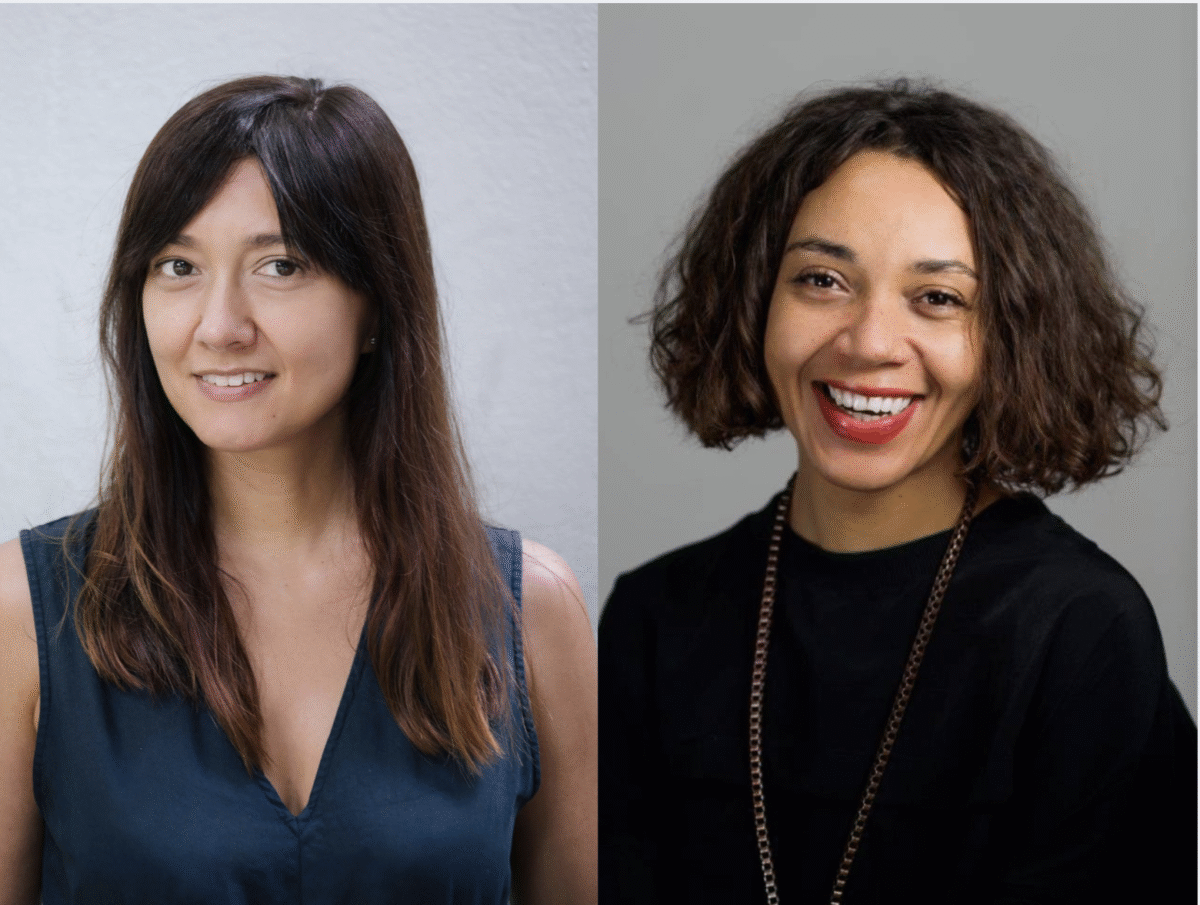
We’re delighted to be launching Lab XL, a programme collaboration between Creative Migration/Bangkok 1899 and Artsadmin, supported by the British Council’s Connections Through Culture programme. While Lab X centred around an exchange between Thai & UK artists, Lab XL shifts the focus. Founder & Executive Director of Creative Migration, Susannah Tantemsapya, and Artsadmin Artistic Director and Co-CEO, Raidene Carter, share why.
Why move beyond artist exchange?
“Lab X worked, it built meaningful relationships.” Susannah reflects. “But it also revealed how much invisible labour underpins international exchange. Producers were carrying responsibility for care, visas, safeguarding, climate reporting and emotional support alongside delivery.
“Artists move, but the infrastructure that makes that movement ethical and sustainable is fragile. If we focus only on mobility without strengthening the conditions around it, we reproduce the same instability. That realisation pushed us towards leadership and systems, not just artists.”
For Raidene, sustainability must include everyone involved. “Artistic exchange only works long-term if all parties take responsibility for their own well-being first. We have to care for ourselves in order to care for others.”
Why is this moment urgent?
Politically, environmentally and socially, leadership is under strain.
“We can’t keep saying more than we’re doing if we want change to last,” says Raidene. “Since 2016, particularly in the UK, movements and campaigns have turned over at speed. Issues flare up and disappear from the mainstream just as quickly. We need sustained leadership, and new narratives around rest, kindness, self-awareness and collaboration, to hold space through those waves of unrest.”
Susannah adds: “We are leading through climate breakdown, political volatility and widening economic inequality. Cultural institutions are expected to respond to all of it, often within tight structural constraints. Endurance is still praised, burnout is still normalised and expansion is still equated with success. That model doesn’t serve creatives, particularly those without financial safety nets. This moment demands that we question the system itself rather than continue performing resilience within it.”
Showing up differently
Lab XL invites leaders to participate differently from traditional development programmes.
“I hope we show up with more vulnerability,” says Raidene. “Less attachment to traditional markers of leadership. I practise collaborative leadership every day, and I’m expecting to come open to learning, bringing my values, lived experience and reflections, not just my CV. With honesty, and comfortable bringing our whole selves.”
For Susannah, it’s about intention over urgency. “Traditional programmes often reward speed and scale. Lab XL asks for steadiness, reflection and a willingness to step away from hierarchy.”
Unlearning and accountability
Part of the exchange involves examining what the sector has normalised.
“We’ve normalised overwork, underpayment and unrecognised emotional labour,” Susannah says. “Unlearning means questioning the assumption that leadership requires personal sacrifice at any cost. Accountability should be visible in how we allocate resources and design timelines. If we speak about equity or decolonisation, it must appear in budgets and contracts, not just language.”
Leadership, Raidene adds, is never purely individual. “The language we use, the preferences and biases we hold, and how those play out in small, everyday decisions, all converge to create culture. We need to look almost forensically at cause and effect, and be honest about how much of ourselves we embed in our institutions and ecosystems.”
Learning across contexts
The exchange also offers an opportunity to examine different approaches to climate action, access and artistic freedom.
“Thailand often operates through adaptability and relational networks, sometimes in the absence of strong infrastructure,” Susannah explains. “The UK has more formal systems around access and environmental reporting, but also more rigidity. I’m interested in exchange without hierarchy, where each context challenges the other.”
Raidene hopes to encounter motivations and perspectives shaped by different geopolitical realities. “I’m especially interested in how climate action might be led by a broader range of voices in Thailand than we typically see centred in the UK and Europe.”
Towards long-term change
If culture is understood as ecology, then labour cannot remain invisible and sustainability cannot remain optional.
“Lab XL tests whether leadership exchanges can produce practical shifts in how resources are distributed and how care is embedded,” says Susannah. “Small structural adjustments, repeated, begin to alter the wider system. That’s where long-term change begins.”
For her, the shift is from production to stewardship. “Outputs matter. But the conditions underneath matter more. Changing how we lead changes what becomes possible.”
Raidene sees leadership itself as a practice. “Like art-making or producing, it takes time and evolves. I’m not expecting to be reshaped entirely, but I do expect to evolve.”
Looking ahead
On a personal level, Raidene is looking forward to reconnecting (digitally and in person) with the Lab X artists and with Susannah more deeply this time. “We’ve done significant work on our organisational values at Artsadmin, and Lab XL feels like the first opportunity to test that through international exchange. It’s exciting, and I’m looking forward to spending time in Thailand again in a professional context.”
For Susannah, the anticipation is grounded in dialogue. “I’m looking forward to honest conversations about pressure, responsibility and class within our sector. To speak openly about what is unsustainable without personalising the problem. And to imagine cultural systems that mirror the natural world, where interdependence and regeneration are built into the design.”
Follow @artsadm and @creativemigration for updates on Lab XL as the programme unfolds.